Sahajayoga Meditation is Always Free
Shri Mataji Nirmala Devi was born on March 21, 1923 to a Salve family in Chhindwara, India. Her parents were Prasad and Cornelia Salve, direct descendants of the royal Shalivahana Dynasty. Seeing the beauty of this child who was born with a spotless brilliance, they called her Nirmala, which means “Immaculate”.
Later on she came to be known by the multitudes by the name of Shri Mataji Nirmala Devi – the revered Mother who was born with her complete Self Realization and knew from a very young age that she had a unique gift which had to be made available to all mankind.
Her parents played a key role in India’s Liberation Movement from under British rule. Her father, a close associate of Mahatma Gandhi, was a member of the Constituent Assembly of India and helped write free India’s first constitution. He was a renowned scholar, master of 14 languages and translated the Quran into Marathi. Her mother was the first woman in India to receive an honours degree in mathematics.
As a child, Shri Mataji lived with her parents in the ashram of Mahatma Gandhi. Gandhi saw the wisdom of this child and used to appreciate her immensely, affectionately calling her "Nepali" due to the Nepali features of her face. Even at a young age, her deep understanding was evident to Gandhi, who frequently sought her advice on spiritual matters.
Shri Mataji’s involvement in the freedom struggle is extremely remarkable. She was very courageous and played a daring role as a youth leader of this campaign. In the 1942 Quit India Movement announced by Gandhi, she was even arrested and put in jail along with other freedom fighters for actively participating in this movement.
Shri Mataji was born with a complete understanding of the human nervous system and its energetic counterparts. In order to become acquainted with the scientific vocabulary attached to these subjects, she studied medicine and psychology at the Christian Medical College in Lahore.
Shortly before India achieved independence, she married Sir C.P. Srivastava, one of India’s most dedicated civil servant officers, who was knighted by the Queen of England. He held the post of Joint Secretary to the Prime Minister’s office of the late Lal Bahadur Shastri in the years 1964-66, and was later elected for 16 consecutive years as the Secretary General of the United Nations International Maritime Organization.
Although she knew about her own spiritual consciousness, she was pondering on the many-faceted problems confronting human beings. On the 5th of May, 1970, on a lonely beach of Nargol (about 150 km from Mumbai), a divine spiritual experience filled her whole being, and she discovered a historical process of en-masse Self Realisation through which thousands of people could get this connection to their Spirit and thereby their inner transformation. Sahaja Yoga (Spontaneous Union with the Self) was born.
She tried it first on people near to her and noticed they were transformed physically, mentally and spiritually. Under the instructions of Shri Mataji they tried giving this power to others. Shri Mataji neither charged for Her lectures nor for Her ability to give Self Realisation. She insisted that you cannot pay for your enlightenment.
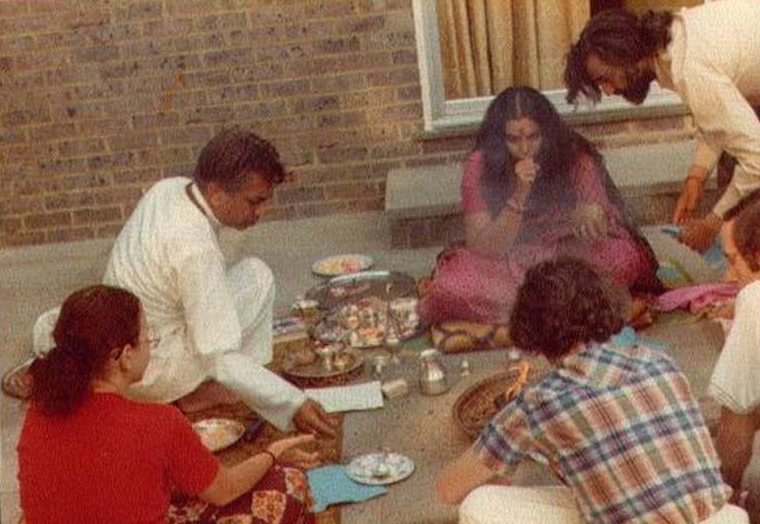
Since 1970, Shri Mataji traveled around the world, giving free public lectures to audiences of 10,000 to 20,000, including filling the Royal Albert Hall in London year after year, and giving Self-Realization en masse.
Welcomed as an official guest of governments worldwide (including China, USSR, Romania). She was awarded an Honorary Doctorate in Cognitive and Parapsychological Sciences, nominated for the Nobel Peace Prize, and received US Congress proclamations.
Shri Mataji founded the Vishwa Nirmala Dharma (Sahaja Yoga), a non-profit organization established in over 95 countries, running entirely through collective volunteering and offering courses permanently free.
In her tremendous concern to alleviate human suffering, Shri Mataji established several non-governmental organizations in the fields of healthcare, arts, and social welfare.
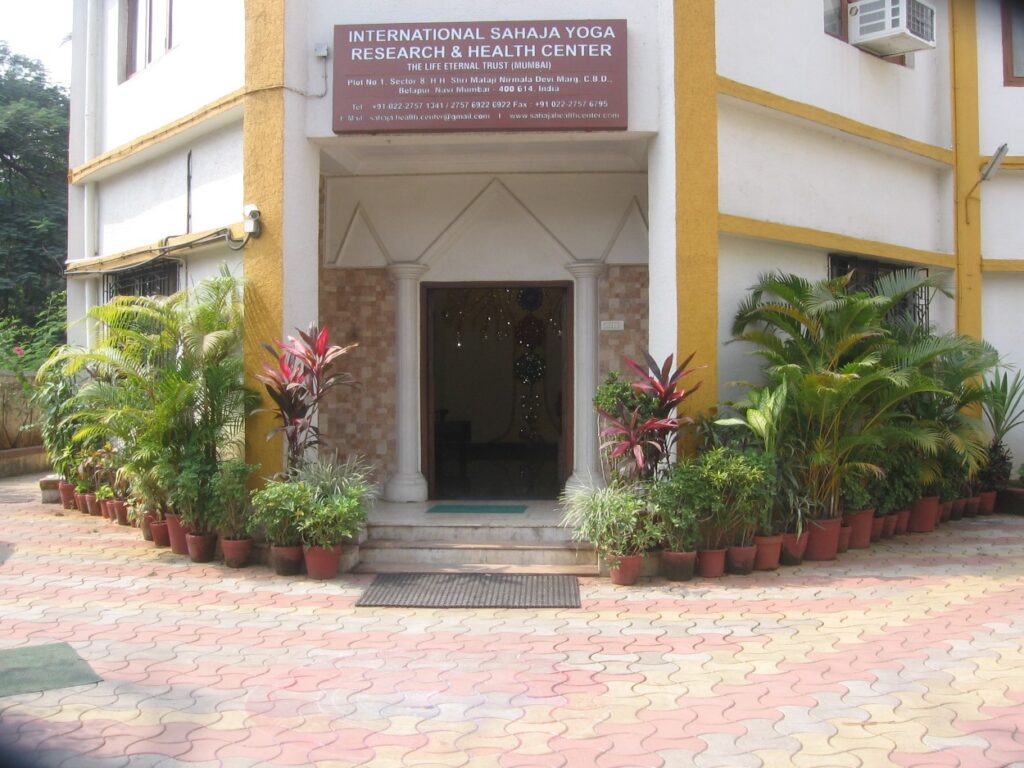
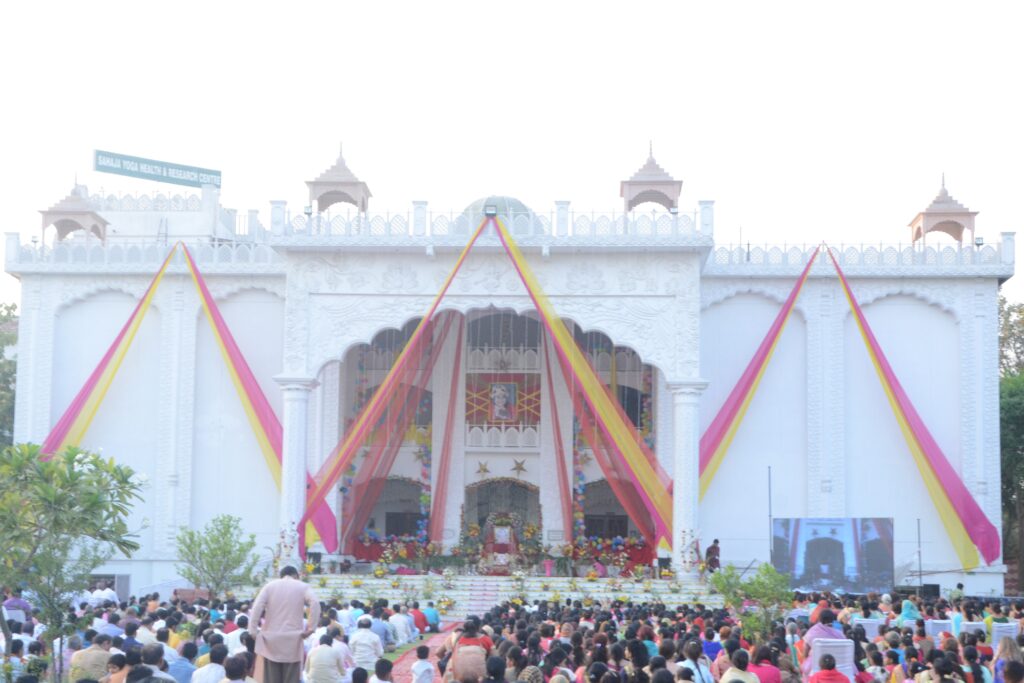
An international research and health center in CBD Belapur, Mumbai, where patients from all over the world are treated and cured using Sahaja Yoga clearing methods and meditation.
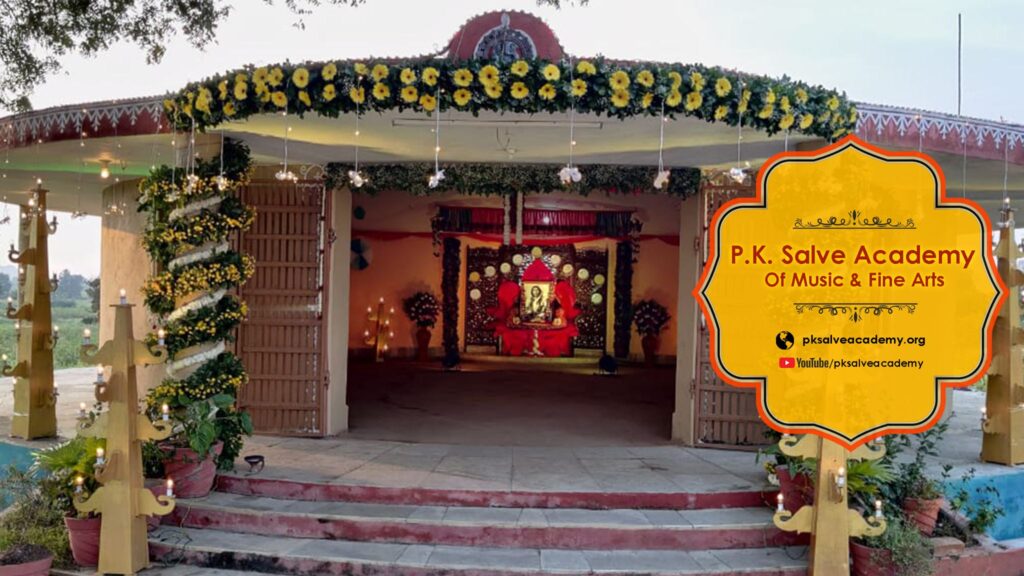
An international music and fine arts school established to promote Indian Classical music (vocals, sitar, tabla, flute) and traditional dance in a vibrated gurukul environment.
A charity home providing rehabilitation, shelter, and support to destitute women, girls, and orphans, helping them become self-reliant and balanced individuals through meditation.